How Inadequate Cleaning Contributes to Workplace Injuries and OSHA Citations
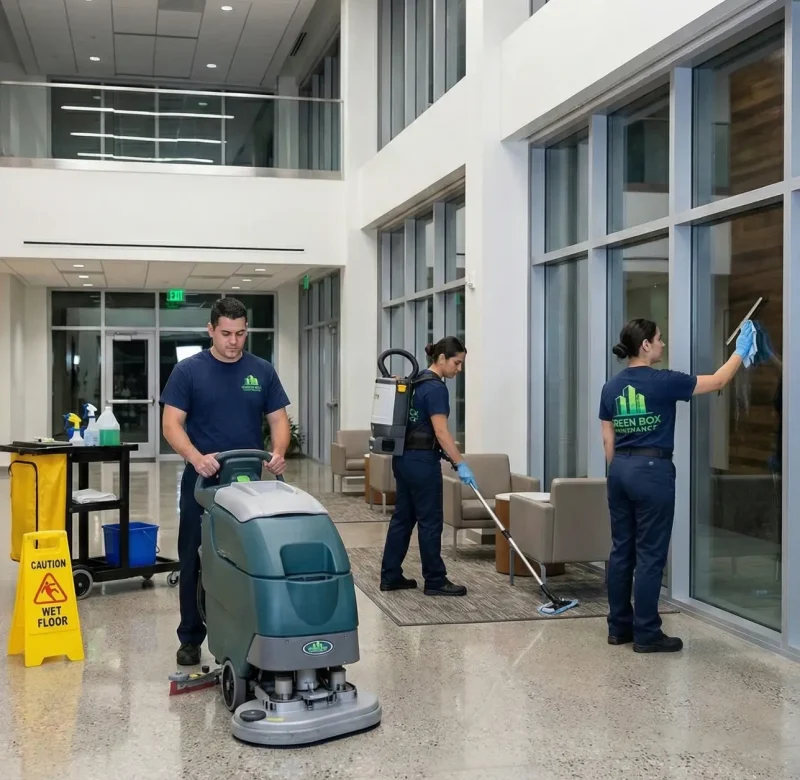
The Hidden Safety Risk Hiding in Plain Sight
Workplace injuries cost U.S. employers over $170 billion annually, and inadequate cleaning practices contribute to nearly 25% of all workplace accidents. Slip-and-fall incidents alone (often caused by wet floors, grease buildup, or debris) account for over 300,000 disabling injuries each year in industrial and food service facilities.
For facility managers and operations directors, cleaning isn’t just about appearances or passing health inspections. It’s a critical component of workplace safety that directly impacts OSHA compliance, workers’ compensation costs, and employee well-being. And yet, so many facilities treat cleaning as an afterthought, only addressing hazards after an injury occurs or a citation is issued.
At Green Box Maintenance, we’ve seen how preventable these incidents truly are. The connection between inadequate cleaning and workplace injuries is clear:
- Slippery floors from improper cleaning or poor drainage
- Chemical exposure from unlabeled containers or inadequate ventilation
- Trip hazards from cluttered workspaces and blocked walkways
- Equipment malfunctions from deferred maintenance
In this guide, we’ll break down the true costs of cleaning-related workplace injuries, reveal the most common OSHA violations we encounter in industrial facilities, and show you how a safety-first cleaning program protects your employees while keeping you compliant with federal regulations.
The Real Costs of Cleaning-Related Workplace Injuries
When inadequate cleaning leads to workplace injuries, the financial consequences extend far beyond the immediate incident. Between OSHA fines, workers’ compensation claims, and operational disruptions, a single preventable accident can cost your facility tens of thousands of dollars.
OSHA Citation Costs
OSHA violations are categorized by severity, with penalties that reflect the risk to worker safety:
- Other-than-Serious Violations: Up to $16,131 per violation for hazards unlikely to cause death or serious harm
- Serious Violations: Up to $16,131 per violation for hazards that could cause serious injury or death
- Willful or Repeated Violations: $16,131 to $161,323 per violation for intentional disregard or repeated non-compliance
- Failure to Abate: Additional $16,131 per day beyond the correction deadline
Common cleaning-related OSHA citations include inadequate floor maintenance (slippery surfaces), improper chemical storage, blocked emergency exits, missing Safety Data Sheets, and failure to provide appropriate personal protective equipment.
The True Cost of Workplace Injuries
A single slip-and-fall injury in your facility triggers multiple expenses:
- Workers’ Compensation: Average claim for slip/fall injuries ranges from $20,000 – $50,000 for medical treatment and lost wages
- Lost Productivity: Injured worker absent for days or weeks, plus time diverted by managers and coworkers
- Replacement Costs: Hiring and training temporary or permanent replacement workers
- Insurance Premium Increases: Workers’ comp premiums rise 10 – 25% following claims
- Legal Exposure: Potential lawsuits if negligence is proven, especially for serious injuries
- Morale Impact: Remaining staff feel less safe, leading to decreased productivity and increased turnover
The Compound Effect
Facilities with poor cleaning and maintenance records face escalating costs over time. OSHA targets repeat offenders with increased inspection frequency and higher penalties. Insurance carriers raise premiums or drop coverage entirely for high-risk operations. And employees become reluctant to work in environments they believe are unsafe.
The investment in proper cleaning protocols and preventative maintenance is minimal compared to the cost of even a single serious workplace injury.
Most Common Cleaning-Related Hazards
OSHA inspectors consistently identify the same preventable hazards across industrial facilities and restaurants. Understanding these common violations helps you prioritize safety improvements and avoid costly citations.
The Top 5 Cleaning-Related Safety Violations
1. Slip, Trip, and Fall Hazards
- Wet or greasy floors without warning signs
- Poor drainage causing water buildup
- Debris, boxes, or equipment blocking walkways
- Worn or damaged flooring with cracks or uneven surfaces
- Prevention: Immediate spill cleanup protocols, non-slip mats in high-risk areas, and regular floor inspections and repairs
2. Chemical Exposure and Improper Storage
- Unlabeled cleaning chemical containers
- Chemicals stored without proper ventilation
- Missing or inaccessible Safety Data Sheets (SDS)
- Mixing incompatible chemicals creating toxic fumes
- Lack of personal protective equipment (PPE) for chemical handling
- Prevention: Locked chemical storage areas, complete SDS library, proper labeling, staff training on safe handling
3. Inadequate Ventilation and Indoor Air Quality
- Poor exhaust systems allowing fume buildup
- Clogged or dirty HVAC filters reducing air circulation
- Chemical use in enclosed spaces without proper ventilation
- Mold or mildew from moisture buildup
- Prevention: Regular HVAC maintenance, functional exhaust fans, adequate air exchange rates in work areas
4. Equipment Maintenance Failures
- Malfunctioning cleaning equipment (floor scrubbers, pressure washers)
- Frayed electrical cords on vacuums or other powered equipment
- Broken or missing guards on machinery
- Leaking equipment creating slip hazards
- Prevention: Monthly equipment inspections, immediate repair of damaged tools, replacement of worn components
5. Blocked Exits and Safety Equipment
- Emergency exits obstructed by cleaning supplies or equipment
- Fire extinguishers hidden behind stored items
- Eyewash stations inaccessible or non-functional
- Safety signs obscured by clutter
- Prevention: Daily walkthrough ensuring clear exit paths, designated storage areas away from safety equipment
Critical Note: OSHA prioritizes violations that pose immediate danger to workers. Facilities with multiple violations, especially those involving chemical exposure or fall hazards, face significantly higher penalties and mandatory follow-up inspections.
Building a Safety-First Cleaning Program
A comprehensive, OSHA-compliant cleaning program doesn’t just protect your workers. It protects your business from costly citations, injuries, and operational disruptions. Here’s how to build a culture of safety through systematic maintenance.
Daily Safety Protocols
- Immediate spill cleanup with clear signage during wet floor periods
- Pre-shift safety walkthroughs identifying hazards before work begins
- Proper PPE usage for all cleaning tasks (gloves, goggles, respirators when needed)
- Chemical concentration verification to avoid overuse or unsafe mixing
- Clear communication of hazards to all staff members
Staff Training Requirements
OSHA requires documented training for workers handling chemicals and operating cleaning equipment:
- Hazard Communication Standard (HazCom) training on chemical safety
- Proper use of personal protective equipment
- Emergency response procedures for spills or exposure
- Correct operation of cleaning machinery
- Slip/fall prevention techniques
Documentation is critical: Maintain signed training records, refresh training annually, and provide additional training when new chemicals or equipment are introduced.
Proper Chemical Handling and Storage
- Store all chemicals in locked, well-ventilated areas away from food and work zones
- Label every container with the chemical name, hazard warnings, and date
- Maintain current Safety Data Sheets (SDS) accessible to all employees
- Never mix chemicals unless manufacturer-approved
- Use color-coded containers to prevent accidental misuse
- Provide appropriate PPE (gloves, goggles, aprons) at chemical storage locations
Maintenance and Inspection Schedule
Weekly: Floor condition inspections, chemical inventory checks, equipment functionality tests
Monthly: Ventilation system performance, lighting adequacy in work areas, emergency equipment accessibility
Quarterly: Professional deep cleaning, HVAC filter replacement, comprehensive safety audits
Annually: Staff retraining, SDS updates, review of incident reports to identify patterns
How Green Box Maintenance Ensures OSHA Compliance
Our industrial cleaning and maintenance programs are designed with worker safety as the top priority:
✅ OSHA-Compliant Protocols: All services follow federal safety standards with documented procedures
✅ Eco-Friendly, Non-Toxic Products: Reduce chemical exposure risks while maintaining cleaning effectiveness
✅ Professional-Grade Equipment: Well-maintained tools that meet safety standards and prevent operator injuries
✅ Staff Training Support: Guidance on proper techniques, PPE usage, and hazard recognition
✅ Safety Audit Services: Comprehensive facility walkthroughs identifying potential OSHA violations before inspectors arrive
✅ Digital Safety Documentation: GreenTrack™ platform maintains training records, SDS library, and inspection logs
Our clients report fewer workplace injuries, zero OSHA citations related to cleaning practices, and improved employee confidence in workplace safety. When cleaning is done right, everyone benefits.
Prevention Protects People and Profits
Workplace injuries caused by inadequate cleaning are entirely preventable, yet they cost employers billions annually in OSHA fines, workers’ compensation claims, and lost productivity. The choice is clear: invest in systematic, safety-focused cleaning protocols now, or pay far more when injuries and citations occur.
The facilities that maintain safe work environments aren’t spending more. They’re spending smarter. They understand that proper cleaning isn’t an expense, it’s an investment in their most valuable asset: their employees. And the return on that investment shows up in fewer injuries, lower insurance premiums, higher morale, and zero OSHA violations.
At Green Box Maintenance, we’ve helped industrial facilities, restaurants, and commercial operations across the U.S. and Canada create safer workplaces through OSHA-compliant cleaning and maintenance programs that protect workers while reducing operational risk.
Ready to Build a Safer Workplace?
Whether you operate a manufacturing plant in Detroit, a commercial kitchen in Calgary, or a food processing facility in Austin, workplace safety through proper cleaning and maintenance is achievable with the right partner. Wherever you are, Green Box Maintenance will help you avoid OSHA fines and keep your employees safe.
Contact us to get started with a personalized assessment.
Don’t wait for an injury or OSHA citation to reveal hazards you could have prevented. Join our clients who have built safer, more productive workplaces where employees feel protected, and operations run smoothly.
About Green Box Maintenance
Trusted by over 500 foodservice businesses across the U.S. and Canada, Green Box Maintenance delivers commercial-grade, eco-conscious cleaning and maintenance solutions. From daily sanitation to emergency repairs, we help restaurants operate cleaner, greener, and more profitably, without compromise. Click here to learn more.